
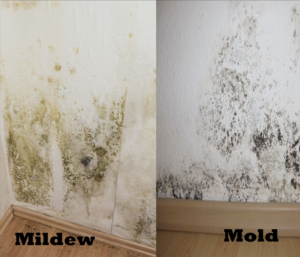
Mold and mildew can impact indoor air quality and health. But what are the differences between mold and mildew?
Mold and mildew are types of fungi that grow in moist, damp environments. There are many varieties of mold and mildew. They are categorized by allergenic, pathogenic and toxigenic according to family handyman.
In addition to biological differences, mold and mildew differ in appearance, odor and location. Servpro offers the following information:
Since mold and mildew thrive in moist environments, controlling moisture and humidity are key. The EPA (Environmental Protection Agency) provides the following information:
Related: Why Some Countries Have More Indoor Air Pollution Than Other Countries
According to the American Lung Association, mold can trigger allergic reactions and asthma symptoms. Exposure to mold has been linked to coughing, sneezing, wheezing, nasal congestion, sore throat and rhinitis (inflammation of the nose).
Mold and mildew have differences, but both thrive in warm, moist environments. Mold and mildew lead to poor indoor air quality and can cause health problems.
We manufacture custom air filters for HVAC systems and specialized equipment. We are in Oklahoma.